

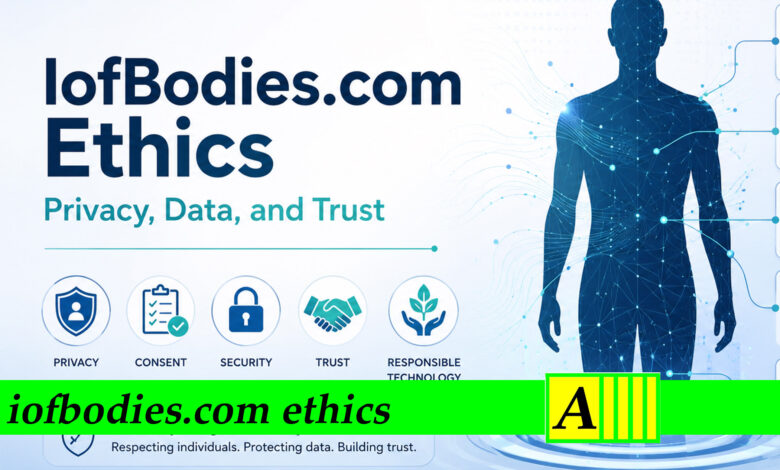
Technology is now very close to our bodies. Many people use smart watches, fitness bands, health apps, smart rings, and other connected tools. Some people also use medical devices that can send health data to doctors. This new area is often called the Internet of Bodies, or IoB.
IofBodies.com is a website that shares information about the Internet of Bodies. It talks about body-connected devices, health data, privacy, safety, and the future of this technology. When people search for IofBodies.com ethics, they usually want to know one thing: can this kind of technology be trusted?
This is an important question. IoB devices can help people live better lives. They can track health, support medical care, and give useful information. But they can also collect very personal data. This can include heart rate, sleep, movement, blood sugar, body temperature, and other health details.
Ethics means doing things in a fair, safe, and honest way. In the case of IofBodies.com ethics, the main topics are privacy, data ownership, consent, security, trust, fairness, and user control. This article explains these topics in simple words so anyone can understand them.
What Is IofBodies.com?
IofBodies.com is an informational website about the Internet of Bodies. It explains how connected body devices work and how they may affect daily life. The site covers topics such as health devices, wearable tools, sensors, artificial intelligence, data use, and privacy.
The website is not only about technology. It also looks at the human side of IoB. This is important because body data is not the same as normal online data. A search history or shopping list can tell something about a person, but body data can tell much more. It can show health problems, habits, stress, sleep quality, and even possible future health risks.
This is why ethics matters. A company, website, app, or device that deals with body data must think carefully about how that data is collected, stored, used, and shared.
What Is the Internet of Bodies?

The Internet of Bodies is a group of devices that connect the human body to the internet or to digital systems. These devices may be worn on the body, placed inside the body, or used near the body.
Common examples include:
- Smart watches
- Fitness bands
- Smart rings
- Health tracking apps
- Smart hearing aids
- Heart monitors
- Glucose monitors
- Medical implants
- Connected pills or sensors
- Devices used in hospitals or remote care
These tools can be helpful. A fitness band can help a person understand their activity level. A glucose monitor can help someone manage diabetes. A heart monitor can warn a doctor about a health risk.
But these tools also collect sensitive information. This makes IoB different from many other types of technology. The data comes from the body, so it is deeply personal.
Why Ethics Matters in IoB
Ethics matters because IoB technology touches health, safety, and personal freedom. If body data is used in the wrong way, it can harm people.
For example, a person may use a health app to track a private condition. If that data is shared without clear permission, the person may lose trust. If an employer or insurance company gets access to sensitive health data, it could lead to unfair treatment. If a connected medical device is not secure, it could create safety risks.
Good ethics helps protect people. It asks important questions, such as:
- Does the user know what data is being collected?
- Did the user give clear permission?
- Can the user delete their data?
- Is the data protected from hackers?
- Is the device safe to use?
- Is the information used in a fair way?
- Can people understand the privacy policy?
- Does the company collect only the data it really needs?
These questions are not small details. They are the base of trust.
Privacy and Body Data
Privacy is one of the biggest issues in IofBodies.com ethics. Body data can be very personal. It may show when a person sleeps, how often they exercise, how stressed they are, or whether they may have a health problem.
People should know what data is being collected and why. They should not have to read long and confusing privacy pages to understand this. Clear language is part of ethical design.
A good IoB service should explain:
- What data it collects
- Why it collects the data
- How long it keeps the data
- Who can see the data
- Whether the data is shared with others
- How the user can delete the data
- What happens if there is a data breach
Privacy also means giving users real choices. A person should be able to use a service without giving away more data than needed. If a sleep tracker only needs sleep data, it should not collect extra location data without a strong reason.
Who Owns Body Data?
Data ownership is another key part of IofBodies.com ethics. When a device collects data from your body, who owns that data? Is it you? Is it the company that made the device? Is it the app? Is it the doctor or hospital?
Many people believe the user should have strong rights over their own body data. This makes sense because the data comes from their body. Users should be able to see their data, correct it, download it, and delete it when possible.
But in real life, this can be complex. A company may store the data on its servers. A health provider may use the data for care. A third party may process the data for analytics. This is why clear rules are needed.
Ethical IoB systems should not hide data rules in confusing text. They should explain data ownership in simple words. Users should know what they control and what they do not control.
Consent Should Be Clear
Consent means permission. In IoB, consent must be clear, honest, and easy to understand.
A user should not be tricked into sharing body data. They should not be forced to accept unclear terms just to use a basic feature. They should also be able to change their mind later.
Good consent has these qualities:
- It is easy to read
- It explains the purpose of data collection
- It gives real choices
- It does not hide important details
- It allows users to withdraw permission
- It is shown before data is collected
For example, if a health app wants to share user data with an advertising partner, the user should know this clearly. The app should not use vague words like “improve services” when the real purpose is advertising or tracking.
Clear consent builds trust. Hidden consent breaks trust.
Security and Safety Risks
Security is very important for IoB devices. Since these devices collect sensitive data, they must be protected well. Weak security can lead to data leaks, hacking, or misuse.
Security risks may include:
- Poor passwords
- Weak app protection
- Unsafe data storage
- Unclear third party access
- Old software with known problems
- Devices that do not receive updates
- Data sent without strong protection
For some IoB devices, the risk is not only about privacy. It can also be about physical safety. If a connected medical device is poorly protected, a security issue could affect how the device works. This is why IoB security must be taken seriously.
Companies should use strong safety checks. They should update devices when problems are found. They should also tell users quickly if their data is exposed.
Trust and Transparency
Trust is not built by words only. It is built by honest action.
A website or company connected to IoB should be open about its goals. It should explain how it handles user data. It should not make big promises that it cannot keep. It should also be honest about risks.
Transparency means being clear and open. For IofBodies.com ethics, transparency can include:
- Clear privacy information
- Easy contact options
- Simple explanations of data use
- Honest limits of the technology
- Clear warnings about health or legal advice
- Open information about third party sharing
People are more likely to trust a platform when they feel respected. If a company hides important details, users may feel used instead of helped.
Fairness and Bias
Fairness is another part of IoB ethics. Some IoB tools use artificial intelligence or automatic systems to study body data. These systems may give health tips, risk scores, or alerts.
But technology is not always fair. If a system is trained mostly on data from one group of people, it may not work well for other groups. This can lead to wrong results or unfair treatment.
For example, a health tool may be less accurate for people with different skin tones, ages, body types, or health conditions. This can be a serious issue if the tool is used for medical choices.
Ethical IoB technology should be tested on many types of people. It should also be checked often. Companies should not claim that a tool works for everyone unless they have strong proof.
User Control Is Important
Users should have control over their body data. This does not mean every user must understand every technical detail. It means the system should give simple and useful controls.
Good user control may include:
- Turning data collection on or off
- Choosing what data to share
- Downloading personal data
- Deleting old data
- Changing privacy settings
- Seeing who has access
- Stopping third party sharing
Many people do not have time to study complex privacy settings. So the default settings should protect the user. Privacy should not be something only experts can manage.
The Role of Companies and Developers
Companies and developers have a big duty in IoB ethics. They should not only think about profit or growth. They should also think about people.
A responsible company should:
- Collect only needed data
- Protect user data
- Use simple privacy language
- Ask for clear consent
- Avoid unfair data use
- Test devices for safety
- Fix security problems quickly
- Be honest in marketing
- Respect user choices
Developers should also think about harm before launching a product. A feature may be possible, but that does not always mean it is right. For example, collecting more data may help a company learn more about users, but it may also increase privacy risk.
Good ethics means choosing safety and respect, even when it takes more work.
The Role of Users

Users also have a role. People should learn the basics before using body-connected tools. This does not mean users are to blame if a company acts badly. Companies still have the main duty to protect people. But smart user habits can reduce risk.
Users can ask:
- Do I understand what this device collects?
- Do I trust this company?
- Can I change privacy settings?
- Is the app asking for too much data?
- Does the device receive updates?
- Can I delete my data?
- Is this tool approved or checked for medical use if needed?
Users should also be careful with health claims. Not every device gives medical grade information. Some tools are made for wellness, not diagnosis. If a device gives serious health warnings or advice, it is best to speak with a health professional.
Why IofBodies.com Ethics Is a Useful Topic
The keyword IofBodies.com ethics is useful because it connects a website topic with a real public concern. People want to understand new body-connected technology in a simple way. They want to know what is helpful, what is risky, and what questions they should ask.
This topic is also important because IoB is growing. More people are using wearables and health apps. More healthcare services are using remote monitoring. More companies are interested in body data. As this grows, ethics will become even more important.
A strong ethics discussion helps users, companies, and developers make better choices. It reminds everyone that the human body is not just another data source. It deserves care and respect.
Final Thoughts
IofBodies.com ethics is about using Internet of Bodies technology in a safe, fair, and honest way. IoB tools can bring many benefits. They can help people track health, manage conditions, and understand their bodies better. But these benefits must not come at the cost of privacy, safety, or human freedom.
The most important ideas are simple. Users should know what data is collected. They should give clear consent. Their data should be protected. They should have control. Companies should be honest. Devices should be safe. Systems should be fair for different people.
In the end, trust is the heart of IoB ethics. If people trust how their body data is handled, they are more likely to use these tools with confidence. If trust is broken, even useful technology can feel unsafe.
The future of the Internet of Bodies should not only be smart. It should also be responsible, clear, and human centered.
Frequently Asked Questions
1. What does IofBodies.com ethics mean?
IofBodies.com ethics means the privacy, safety, consent, and trust issues linked to Internet of Bodies technology. It looks at how body data should be collected, used, stored, and protected.
2. What is the Internet of Bodies?
The Internet of Bodies is a group of connected devices that collect data from the human body. Examples include smart watches, fitness bands, glucose monitors, and connected medical devices.
3. Why is body data sensitive?
Body data is sensitive because it can show private health details. It may reveal sleep, heart rate, activity, stress, illness, or other personal information.
4. Who should own body data?
Many people believe users should have strong rights over their own body data. They should be able to view, control, download, and delete it when possible.
5. Why is consent important in IoB?
Consent is important because users should know what data is collected and why. They should agree clearly before their body data is used or shared.
6. Can IoB devices be hacked?
Yes, any connected device can have security risks if it is not protected well. This is why strong passwords, updates, encryption, and safe design are important.
7. Are all IoB devices medical devices?
No. Some IoB tools are made for fitness or wellness. Others are medical devices. Users should check the purpose of the device and avoid using wellness tools as a replacement for medical advice.
8. What should companies do to be ethical?
Companies should collect only needed data, explain privacy rules clearly, protect data, ask for real consent, fix security issues, and respect user choices.
9. How can users protect their body data?
Users can read privacy settings, limit data sharing, use strong passwords, update apps, avoid unknown devices, and choose trusted companies.
10. Why will IoB ethics matter more in the future?
IoB ethics will matter more because body-connected technology is growing. As more devices collect health and body data, privacy, safety, and trust will become even more important.
Visit For More Info : Aurora Magazine