

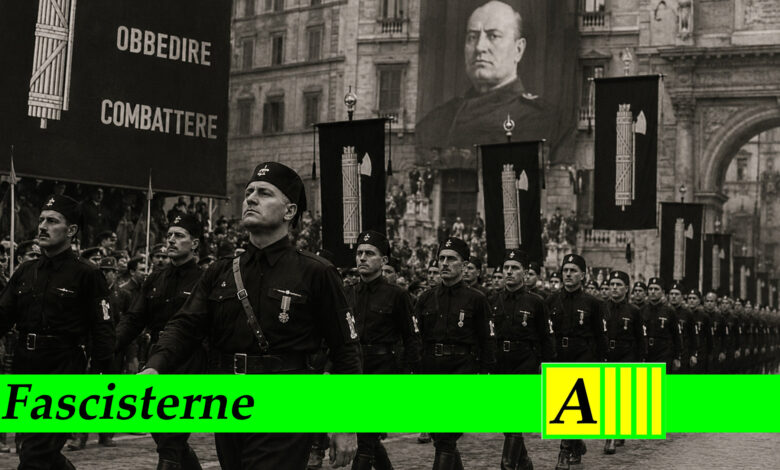
The term Fascisterne refers to the fascists, political movements and individuals who supported fascism, a political ideology that emerged in Europe during the early twentieth century. Understanding Fascisterne is important because their influence shaped major historical events, transformed political systems, and left a lasting mark on modern society.
Today, historians, political scientists, and educators study fascism not only to understand the past but also to recognize how authoritarian movements develop and affect nations. By examining the beliefs, goals, and actions associated with Fascisterne, we gain valuable insight into one of the most influential political ideologies of the modern era.
What Is Fascism?
Fascism is a political ideology characterized by strong centralized authority, intense nationalism, limited political opposition, and the belief that the interests of the state should come before individual freedoms. A fascist movement typically promotes national unity, social discipline, and loyalty to a powerful leader.
Unlike democratic systems that encourage political debate and multiple parties, fascist governments often favor a one-party state, strict state control, and reduced civil liberties. These characteristics place fascism within the broader category of authoritarianism and, in some cases, totalitarianism.
The study of Fascisterne often focuses on how these movements gained support and maintained political influence during periods of social and economic uncertainty.
The Origins of Fascisterne
The roots of Fascisterne can be traced to post-World War I Europe. Economic hardship, political instability, and widespread dissatisfaction created conditions that allowed radical political movements to grow.
The most famous fascist movement emerged in Italien under the leadership of Benito Mussolini. Mussolini established what became known as Italian Fascism, a system that emphasized nationalism, military strength, and loyalty to the state.
A key event in the rise of Fascisterne was the March on Rome in 1922. This event helped Mussolini secure power and marked the beginning of fascist rule in Italy.
Another influential figure was Giovanni Gentile, whose philosophical ideas contributed to the intellectual foundations of fascist ideology.
Core Beliefs of Fascisterne
Although fascist movements varied from country to country, several common themes appeared repeatedly.
Nationalism and National Identity
A central element of fascism is strong nationalism. Fascisterne promoted the idea that national interests should take priority over individual concerns. This often involved emphasizing a shared culture, history, and national identity.
Authoritarian Leadership
Fascist systems generally support a powerful leader who exercises significant control over government institutions. Decision-making is concentrated at the top, with limited political opposition.
Militarism and Discipline
Many fascist movements valued military strength and social discipline. Militarism was viewed as a means of strengthening the nation and promoting unity.
Corporatism
Another important concept was corporatism, a system in which economic sectors such as labor and business were organized under state supervision. Supporters believed this approach could reduce conflict and improve national coordination.
Political Control and Propaganda
Fascisterne frequently used propaganda to shape public opinion and encourage loyalty. Governments often controlled media outlets and limited criticism of state policies.
Fascisterne and Authoritarian States
One of the defining characteristics of Fascisterne was their support for an authoritarian state. In such systems, political power is concentrated in a small group or a single leader.
Authoritarian governments often restrict political competition and place limits on freedom of expression. As a result, civil rights, freedom of speech, and independent political organizations may face significant pressure.
Many historians consider fascist governments examples of authoritarian rule because of their centralized power structures and limited tolerance for opposition.
Fascism, Democracy, and Political Extremism
Understanding Fascisterne also requires comparing fascism with democracy.
Democratic systems encourage elections, political diversity, and public participation. Citizens are generally free to express opinions, join political organizations, and criticize government policies.
Fascist systems, by contrast, often reduce political competition and emphasize national unity over political pluralism. Because of these features, fascism is frequently categorized as a form of political extremism.
The relationship between fascism and democracy remains a major topic of discussion among historians and political scholars.
Fascisme vs Nazisme
One of the most common questions involves the difference between fascism and Nazism.
Both ideologies shared elements such as authoritarian leadership, nationalism, propaganda, and opposition to liberal democracy. However, Nazism placed a stronger emphasis on racial ideology and biological theories.
While all Nazis were fascists in a broad political sense, not all fascists adopted the racial doctrines associated with Nazism. Understanding these distinctions helps provide a more accurate view of twentieth-century political history.
The comparison between fascism vs Nazism remains an important area of academic research and public education.
The Role of Fascisterne During World War II
The influence of Fascisterne expanded significantly during World War II. Fascist governments and movements played major roles in shaping the political and military developments of the era.
The war ultimately transformed global politics and demonstrated the consequences of aggressive nationalism, militarism, and authoritarian governance. Following the conflict, many countries strengthened democratic institutions and international cooperation to prevent similar developments in the future.
The lessons learned from this period continue to influence political thought and public policy around the world.
Why the History of Fascisterne Still Matters
The history of Fascisterne remains relevant because it offers important lessons about political systems, leadership, and civic responsibility.
Scholars widely agree that studying historical examples helps societies recognize patterns associated with authoritarian movements. By understanding how fascist movements emerged and gained support, citizens can better appreciate the importance of democratic institutions, independent media, and civil liberties.
Modern discussions about political ideologies frequently reference fascism as a historical example of how concentrated power can reshape society.
Expert Perspective and Historical Consensus
Leading historians generally agree that fascism emerged as a distinct political ideology during the interwar period. Academic research consistently identifies nationalism, authoritarian leadership, political control, propaganda, and militarism as central characteristics of fascist movements.
This article is based on established historical scholarship and widely accepted academic interpretations. The goal is to provide clear, balanced, and accurate information that helps readers understand Fascisterne within their historical context.
Conclusion
Fascisterne played a significant role in shaping twentieth-century history. From the rise of Italian Fascism to its influence during World War II, fascist movements left a lasting impact on politics, society, and international relations.
By studying fascism, authoritarianism, nationalism, and political extremism, readers gain a deeper understanding of how governments function and why democratic values remain important. The history of Fascisterne serves as a reminder that informed citizens and strong institutions play an essential role in preserving freedom, accountability, and political stability.
Frequently Asked Questions About Fascisterne
What does Fascisterne mean?
Fascisterne is the Danish term for “the fascists.” It refers to individuals or movements that support fascist political ideology.
Who was the most famous fascist leader?
Benito Mussolini is widely recognized as the most prominent historical fascist leader and the founder of Italian Fascism.
What are the main characteristics of fascism?
Key characteristics include nationalism, authoritarian leadership, propaganda, militarism, corporatism, political control, and limited political opposition.
Is fascism the same as Nazism?
No. While the two ideologies share several similarities, Nazism included racial doctrines that were not universal across all fascist movements.
Why is it important to study Fascisterne today?
Studying Fascisterne helps people understand historical events, political ideologies, and the importance of democratic institutions and civil liberties.
Visit For More Info : Aurora Magazine